Vignettes: A keystone of interior design
The term “vignette” is used in interior design to describe a small grouping of objects, usually on a table or shelf, that are arranged to create an artful display, For example, on top of your mantle, you might place some greenery in a silver urn next to a wooden candlestick, fronted with a miniature ceramic bust. Or, you might group a lidded wooden cannister, a ceramic jug, and a porcelain sculpture on your kitchen counter..
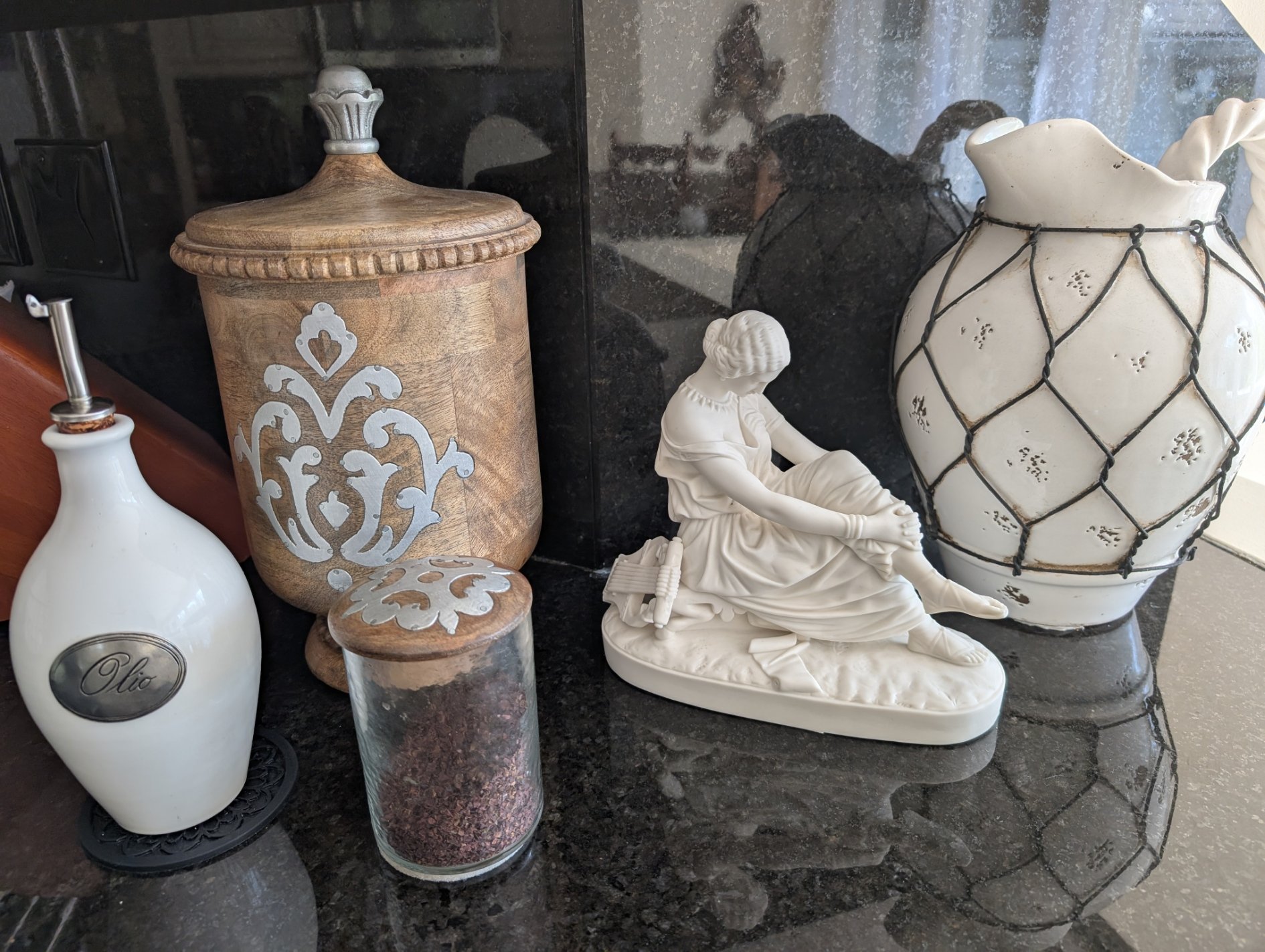
A ceramic oliera, a couple of olive wood cannisters that include crackle glass and metal inlays, a Tuscan ceramic pitcher, and a Victorian-era Parian porcelain sculpture of Sappho after J.J. Pradier.
However, we want to expand the concept of the vignette to include any curated grouping of objects and furniture that could be considered a single coherent scene. Thus, this is a vignette, writ large:
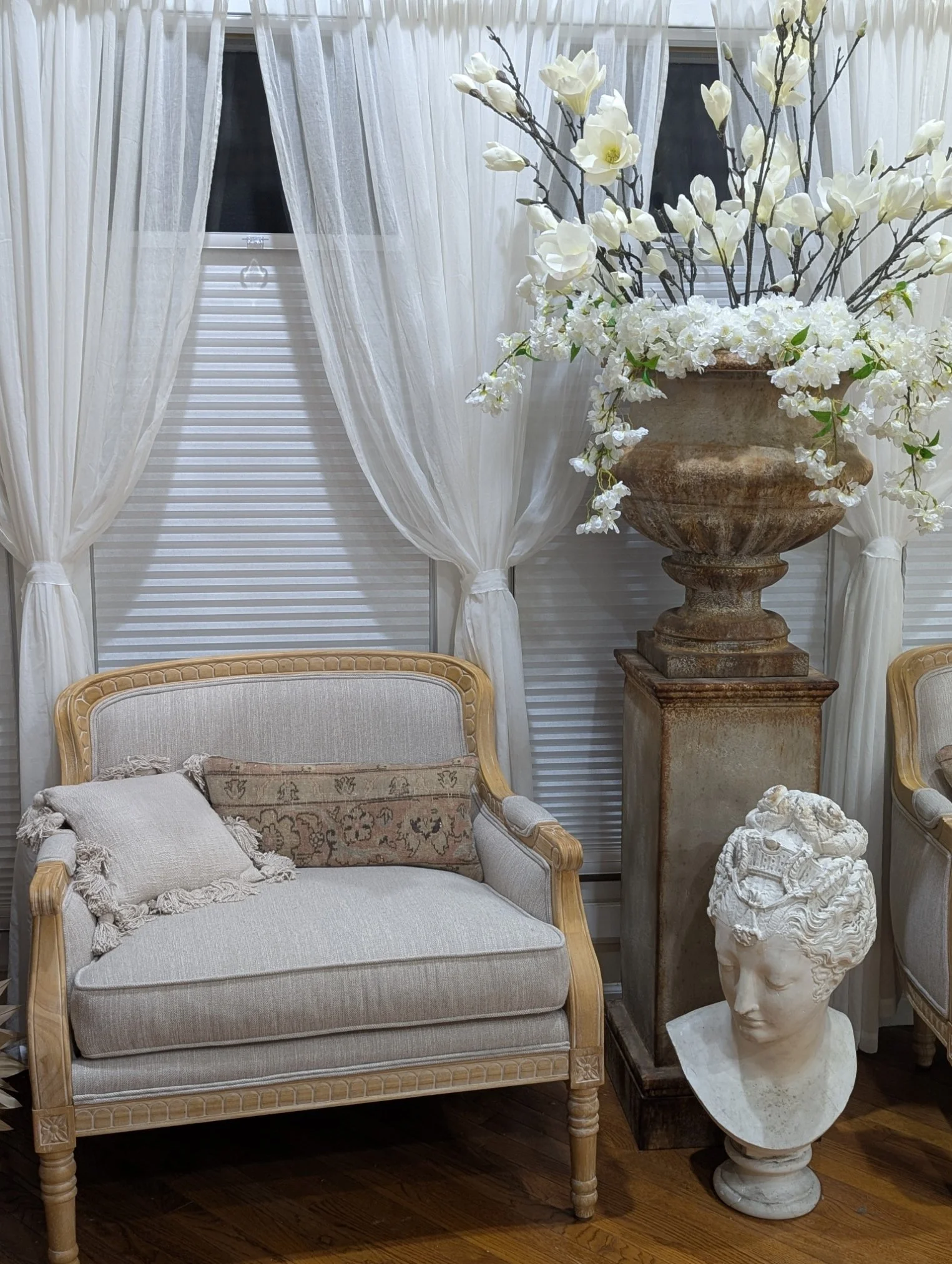
Bergère chairs with carpet throw pillows, a zinc planter with faux magnolia and cherry blossoms, and a 19thC plaster bust of Diane of Poitiers.
And so is this…
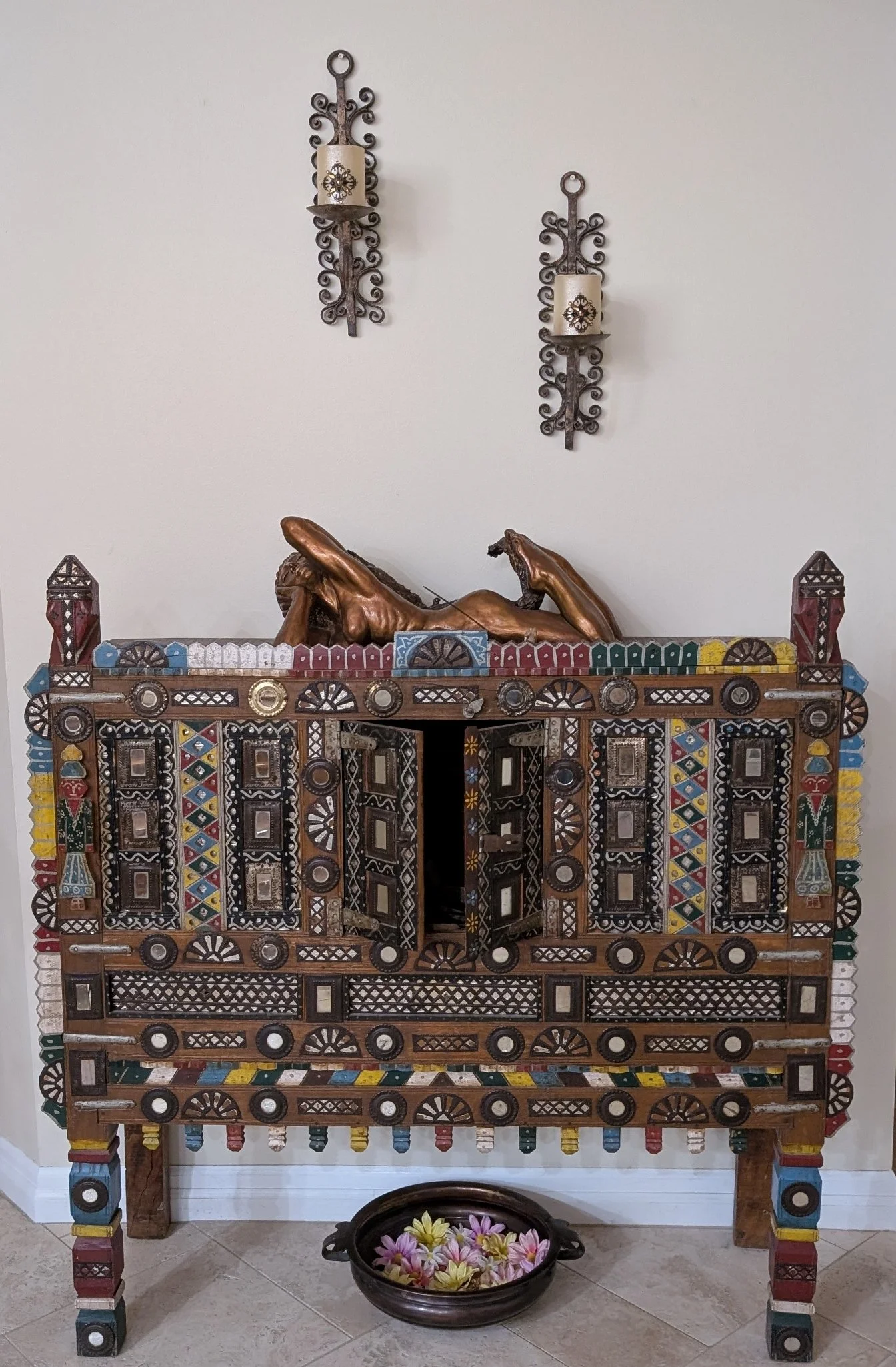
An Indian damchiya or dowry chest, some wrought iron wall candle sconces, and an urli vessel filled with flowers, and a sculpture of The Sea.
Basically, you take the vignette concept of arranging objects artfully and expand your vision beyond small surfaces. Seeing things this way helps you tackle decorating larger spaces without feeling overwhelmed because you can compartmentalize and beautify a section at a time: each scene is self contained. Taking a vignette approach in this way also enables you to add some variety to the room because you can do different things in each vignette, keeping in mind the overall coherence of the larger space.
How to Do Vignettes Successfully
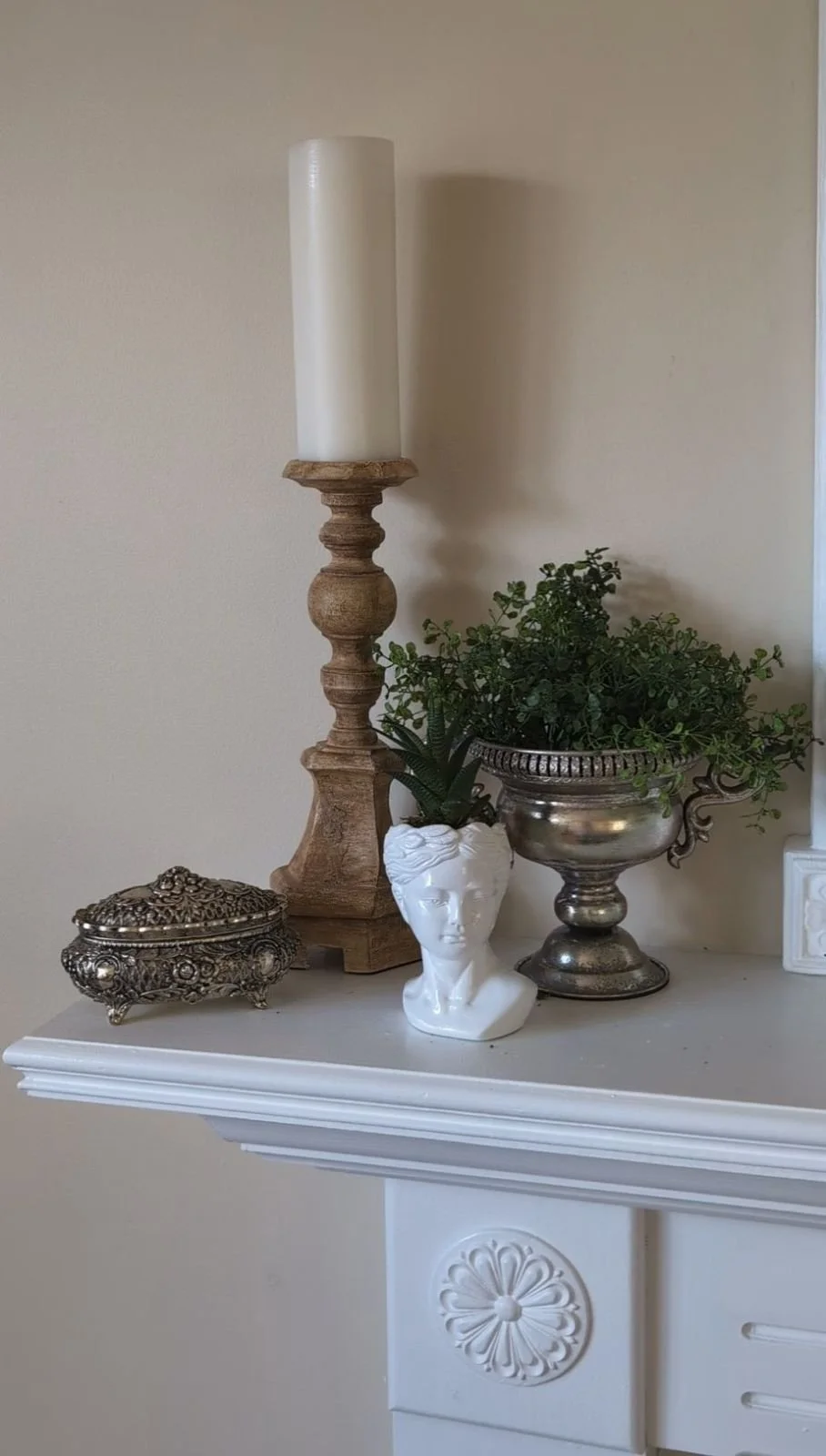
A mantle top with silver items alongside a wooden candlestick and a porcelain bust. Soft greenery and semi-soft wax accompany these hard materials.
To do a vignette, large or small, really well there are some foundational considerations.
First, use a mixture of materials and textures. Metal along with stone along with wood and porcelain, etc. Soft plants or flowers accompanying hard marble or iron.
Vary the heights and shapes as well. In the image for this section, the silver box is low and oblong while the bust planter is a little taller and vertically oriented. The urn is mid-height, and the candlestick is tallest. The shapes can be arranged accordingly like in a school photo—the tallest kids in the back with sitters in the front.
Limit the colors so there is coherence. You don’t want a dozen different colors in a vignette, small or large. In the image there is silver, green, white and beige, with an overall neutral tone that unifies.
Some say to tell a story with your vignettes, but be careful when doing this so you’re not hitting the viewer over the head with a theme. For example, you don’t want to go “super beachy” and pile on shells, starfish, coral, sailboat paintings, rope, etc. in one place.
Odd numbers of items can work best, as in arranging plantings in gardens, because they look more natural and less contrived. Even numbers can either look incomplete—think just two items versus three—or too geometrical. However, this isn’t a hard and fast rule. There are four items in the mantle vignette for this section, but the variations in size and shape still keep it looking uncontrived.
So, open your mind to the concept of vignettes on a large scale and apply the basic principles above for successful vignette-making—small or large. Have you use vignettes for more than small surfaces? Let us know how in the comments.